What Is Custom eLearning Development? A Simple Guide
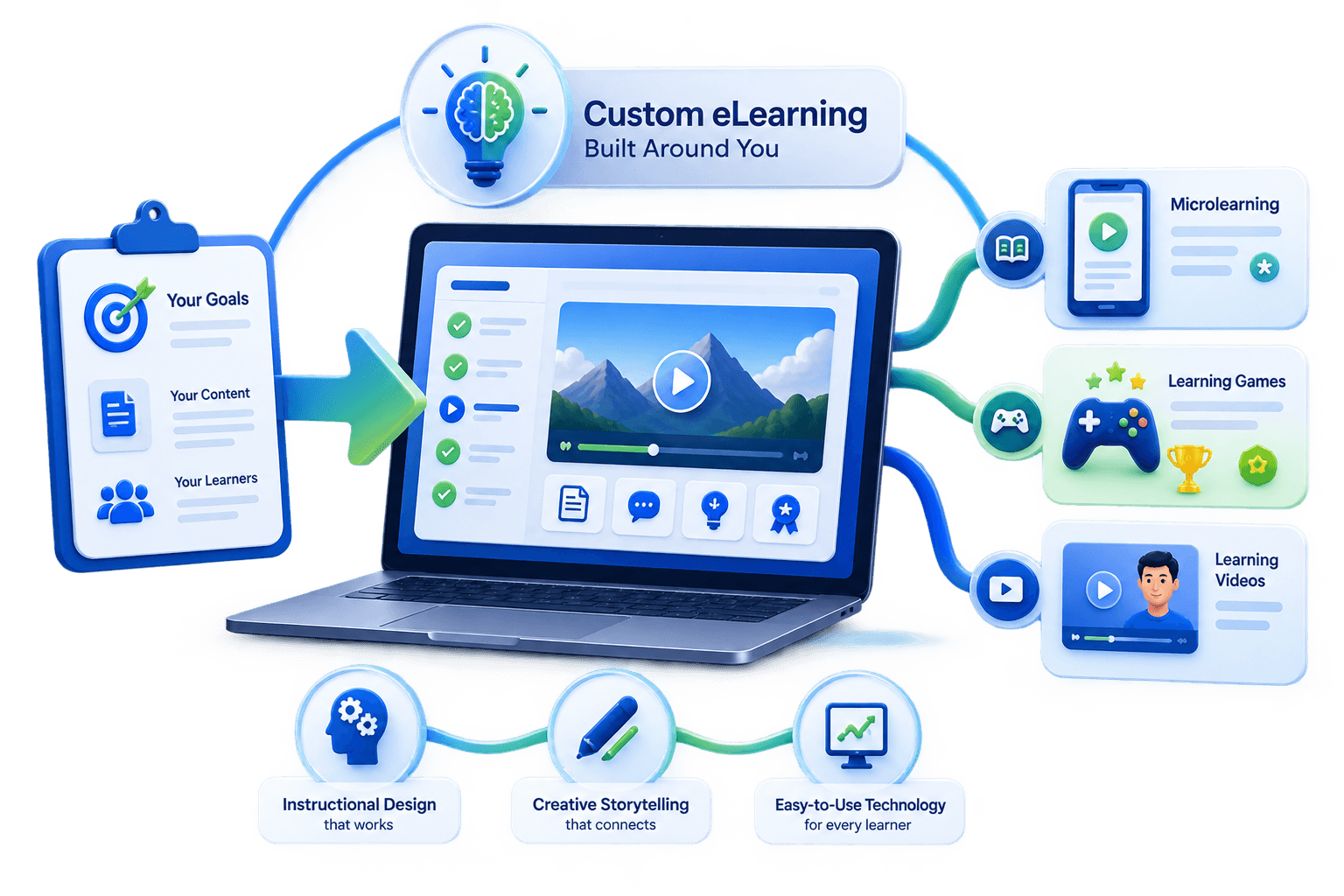
Custom eLearning development is the process of turning an organization's existing training content — whether that's a slide deck, a compliance manual, or knowledge sitting in a subject matter expert's head — into an interactive digital course built around real learning goals, rather than a generic, one-size-fits-all program.
Why custom matters
Off-the-shelf training libraries cover general topics well, but they can't reflect your specific processes, your industry's regulations, or the way your own team actually works. Custom eLearning development starts with what you already have — your policies, your product knowledge, your compliance requirements — and shapes it into a course that fits your organization exactly.
What the process actually looks like
A typical custom eLearning project moves through a few clear stages. Content and goal review comes first, since the starting point is always what you already have: existing documentation, past training materials, and input from your subject matter experts. The goal here is to figure out what learners genuinely need to walk away knowing, not just what's easiest to convert into slides.
Instructional design comes next. This is where a course gets its structure — how information is sequenced, where quizzes or scenarios go, how long each module should run. Good instructional design is the difference between a course people click through and one they actually remember.
Development and build follows. The course gets built in whatever format fits — often SCORM or xAPI so it can run on any LMS — with interactive elements like branching scenarios, video, or knowledge checks layered in.
Review and refinement closes the process. Subject matter experts review the draft for accuracy, and the course gets refined based on that feedback before it goes live.
Who actually needs this
Custom eLearning development makes the most sense when a company has specific, non-generic training needs: industry compliance requirements, a proprietary process employees need to learn, or a large team spread across locations that all need the same consistent training experience.
How Edutain360 approaches it
Rather than writing training content from scratch, Edutain360 works with what an organization already has — existing manuals, policies, and the knowledge inside its subject matter experts — and turns that into structured, interactive learning through instructional design. Since 2016, that approach has supported more than 400 clients across industries, from compliance-heavy sectors like finance and healthcare to fast-moving startups building their first training program.
A quick way to tell if you need custom eLearning development
If your current training is a PDF, a slide deck nobody finishes, or knowledge that only lives in one person's head, that's usually the sign it's time to turn it into a proper course. A free content audit is a low-effort way to find out what that would actually look like for your content.
About the Author
Robert David is Head of Learning Partnerships at Edutain360, with over 10 years of experience in learning and development, working with organizations to turn existing training content and subject matter expertise into structured eLearning programs.
Frequently asked questions
Quick answers to what course creators ask us most.
Timelines vary with scope, but most custom eLearning projects move from an initial content review to a finished course within a few weeks, not months.
You bring the existing content, your policies, manuals, or subject matter expertise, and Edutain360 handles the instructional design, turning what you already have into a structured course rather than starting from a blank page.
Most custom eLearning is built in SCORM or xAPI so it runs on any standard LMS, with interactive elements like branching scenarios, video, and knowledge checks layered in depending on the topic.
Cost depends on scope, how much existing content there is, and how interactive the final course needs to be. A free content audit gives an exact estimate based on your specific materials.
Off-the-shelf courses cover general topics well but can't reflect your specific processes or policies. Custom eLearning starts with what your organization already has and shapes it around your actual training goals.